
Online Lecture: "Interpreting Đông Sơn Bronze Drum Motifs through Semiotics and Artificial Intelligence Models"
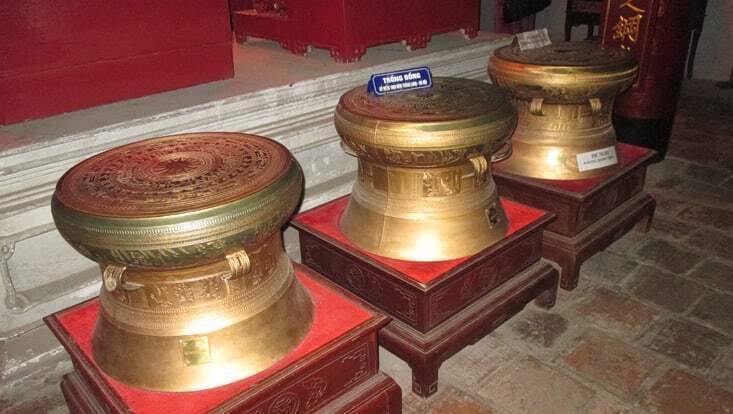
Foto: "Replicas of Đông Sơn bronze drums, Temple of Literature, Hanoi", Gregor Gawellek | UHH, cropped
When: Fri, 06.02.2026 1:30 PM until 3:00 PM
Where: Digital
We kindly invite you to this online lecture in English language on Friday, February 6th, 2026, at 13:30 – 15:00 h (German time/CET/MEZ) / 19:30 – 21:00 h (Vietnamese time/GMT+7).
Lecture Series: Vietnamese Culture Forum
A collaboration between the Vietnam Studies Center, Fulbright University Vietnam,
and the Department of Vietnamese Studies, University of Hamburg
Online lecture by
Dr. Đinh Hồng Hải:
"Interpreting Đông Sơn Bronze Drum Motifs through Semiotics and Artificial Intelligence Models"
Speaker:
Dr. Đinh Hồng Hải, Department of Anthropology and Religious Studies, Hanoi Vietnam National University
Discussant:
Nguyễn Thái Anh
Host:
Prof. Dr. Thomas Engelbert, University of Hamburg
Friday, 06.02.2026
13:30 – 15:00 h (German time/CEST/MESZ)
19:30 – 21:00 h (Vietnamese time/GMT+7)
Online lecture:
livestream via ZOOM
Zoom link: https://uni-hamburg.zoom.us/j/66253868114?pwd=7scGP7Pxhf41GFFe6e4MWkFbPiu3GuPw.PZUNVlGUwlHite3-
Webinar-ID: 662 5386 8114
Passcode: 51557827
This lecture will be held in English!
Open to public! – Admission free!
About the lecture:
Bronze drums, particularly the Ngoc Lu drum, represent not only quintessential archaeological artifacts of the Dong Son civilization but also complex semiotic texts. On these artifacts, motifs, spatial layouts, and visual rhythms constitute a multi-layered expressive system concerning the cosmology and social structures of ancient Vietnamese inhabitants. However, extant interpretations of these motifs often rely on speculative hermeneutics and lack empirical substantiation.
This study proposes a novel interdisciplinary methodology: on one hand, it employs a semiotic framework to analyze the functionality of motifs, specifically addressing the Visual Paradox and Interpretation Paradox within the nexus of expressive function and semiotic context. On the other hand, the research implements Artificial Intelligence (AI) through a "non-bias/naive" approach. By utilizing ubiquitous AI models – which inherently lack specific datasets on Dong Son civilization – the study simulates an objective perception of "alien" symbols, thereby deconstructing original expressive layers when detached from pre-existing cultural biases or localized contexts in Vietnam.
In terms of application, this research executes intercultural comparative analyses and precise measurements to elucidate the empirical functions of various decorative bands: (i) benchmarking against the Nebra Sky Disk (Germany) to decode astronomical and calendrical functions and the functional evolution of motifs; (ii) cross-referencing geometric patterns with the Viking Sun Compass to verify maritime navigational capabilities; (iii) utilizing AI to analyze deer-bird motifs to decipher correlations with tidal cycles and lunar calendars ; and (iv) leveraging AI- assisted image enhancement to consolidate the status of the Lac bird icon and the utilitarian roles of associated avian symbols.
The findings aim to offer transformative perspectives on the actual progenitors of the Dong Son culture while establishing a foundational precursor for interdisciplinary empirical research involving high-tech applications, archaeology, and cultural anthropology in Vietnam.
About the speaker:
Dr. Đinh Hồng Hải was appointed to the executive committee of the International Association for Semiotic Studies and to the position of Deputy General Secretary of the Asian Semiotics International Association in 2019. He has been a member of the scientific committee of the Vietnamese National Foundation for Science and Technology (NAFOSTED) since 2022. Since 2024, he has been an editorial board member at the Journal of Daesoon Thought and the Religions of East Asia, The Daesoon Academy of Sciences, Daejin University, Republic of Korea.
Dr. Hải has published over 30 books and 100 articles on related topics in both Vietnamese and English. He earned his MA at the Institute of Cultural Studies, Vietnamese Academy of Social Sciences (VASS), in 2001, and studied for an M.Phil. at the University of Delhi, India, from 2005 to 2006. He studied at Harvard University from 2008 to 2010 and defended his Ph.D. dissertation at VASS in 2011.
About the discussant:
Xin chào! My name is Nguyễn Thế Anh, an independent researcher with a strong interest in integrating modern technologies into cultural heritage preservation. With a technical background from the Karlsruhe Institute of Technology (KIT), where I completed my thesis on the analysis of applications of digital presentation methods conducted in Adam Opel AG (Germany), a decisive turning point in my academic and professional journey occurred in 2018. That year, my participation in the exhibition "Explorians Chất Việt" sparked a profound appreciation for traditional Vietnamese decorative patterns.
Since 2022, I have focused my research on semiotics and the application of artificial intelligence in cultural preservation. I have been fortunate to contribute, in a modest capacity, to projects in collaboration with institutions such as FPT Polytechnic and the Hanoi Youth Union, involving the restoration of portraits of fallen soldiers and historical visual materials for the A50th and A80th National Celebration Vietnam. I have also had the honour of participating in the MACHINA proposal project on the digital preservation of intangible cultural heritage, working alongside research teams from TU Darmstadt, the University of Regensburg, the Deutsches Museum, and other institutions across the European Union. Currently, through the founding of the COMEMO.VN platform, I am striving to optimize AI technologies for the extraction of traditional motifs, the restoration of historical photographic archives, and the digitization of Dong Ho folk paintings. For me, each project represents not only a convergence of technology and art, but also a personal commitment to safeguarding the cultural essence of the nation through the language of a new era.
About the host:
Thomas Engelbert is professor of Vietnamese Studies at the Department of Southeast Asian Studies, Asia-Africa-Institute, University of Hamburg.
His research focus is on Vietnamese and Southeast Asian history, especially Việt folklore, literature and relations between majority and minority groups.
You might also be interested in our department's Instagram account.